 Bureaucracies make convenient scapegoats when they get things wrong. But it turns out that they also can disappoint even when they do well those things which they are well-suited to do. The difference between having a well-oiled machine and achieving a sought-for development outcome emerges especially vividly through a comparison of South Africa’s Western Cape Education Department (the WCED) and Kenya’s educational system.
[A companion post uses a comparison between the WCED and the Eastern Cape Department of Education to explore how divergent provincial-level political, economic and institutional contexts affected performance of the two bureaucracies. Both posts build on the findings of a new book, co-authored/edited with colleagues from the University of Cape Town, The Politics and Governance of Basic Education: A Tale of two South African Provinces, published this month by Oxford University Press and available here, by agreement with OUP, for free download.]
Kenya generally outperformed the Western Cape. In 2007 assessments of Grade 6 mathematics capabilities conducted by the Southern African Consortium for Monitoring Education Quality (SACMEQ). The Western Cape’s median score was 560 points (well above the South African median of 483 points); the score for the poorer 25th percentile was 496 points. Kenya’s median score nationwide was 557 points, with a score of 509 points at the 25th percentile. For Kenya’s Nairobi district (the best direct comparator with the Western Cape), the median score was 585, and the score at the 25th percentile 535 points.
Kenya achieved these superior results notwithstanding higher levels of poverty, average per pupil expenditures which were one fifth of South Africa’s, a cadre of teachers who were no better trained, and (when compared with the Western Cape) a relatively messy bureaucracy. Indeed, as the graph linked here (from chapter 2 in the book) shows, once socio-economic influences on educational outcomes are taken into account, as of 2007 Kenya stood out as far and away the most over-achieving of the countries participating in SACMEQ.
Governance differences help account for these divergent learning outcomes. The WCED is a classic example of a bureaucracy pre-occupied with top-down management and process compliance. Kenya, by contrast, has numerous bureaucratic shortcomings – but (at least through to 2007) these were more than offset by an approach to education sector governance which gave priority, over many decades, to the evocation of agency. 
The WCED undertakes efficiently and effectively many important tasks expected of public education systems, including managing financial re sources, providing decent school infrastructure, assuring timely availability of textbooks and other inputs, assigning personnel to where they are needed, and tracking performance. (Chapter 4 of the book provides details.) Each of these are activities where the production process is standardized, and monitorability of processes, outputs and outcomes is straightforward – precisely the types of tasks which, for reasons explored here and here, bureaucracies are well-positioned to do well. Of course, the obverse can also apply: there exists a class of activities where production is more heterogenous and monitorability is more difficult – and thus which inherently are more challenging for public bureaucracies.
In the best of all possible worlds, a public education system would be able to do all things well. The 2018 World Development Report, Learning to Realize Education’s Promise, highlights Finland and Shanghai, China as good examples. However, as the WDR explores in depth, these examples are rarities. Far more common are education systems which are coherent around narrow conceptions of process compliance (or incoherent, or coherent in the provision of patronage)– but which are not well-aligned with those school-based tasks for which much more responsiveness to hyper-level context is called for.
As a variety of classic analyses of ‘street-level bureaucracies’ (see here, here, here and here) have explored in depth, giving more authority to the service provision front-line potentially can improve performance through three governance-related channels:
- A motivational channel — with school-level flexibility providing an opportunity for internal leaders to motivate teams effectively, and nurture an environment of continuing learning on the part of staff as well as students.
- An informational channel — creating scope to draw on local-level information, of a kind which is not observable by bureaucratic hierarchies, as to what happens inside schools.
- An accountability channel – enabling developmentally-oriented local stakeholders (including professionally committed teaching staff) to hold school staff accountable for making their best effort. (This requires that developmentally-oriented stakeholders indeed have sufficient influence to be able to ‘trump’ predatory actors seeking to capture school-level resources for private purposes – an issue I explore in an earlier book.)
The limits of narrowly top-down approaches to improving learning outcomes become evident in the school-level case studies in chapters 8 and 9 of the book. Take, for example, two schools in the Western Cape which initially were good performers. In both, top-down leadership by the principal was key to success, with consistent support from the WCED helpful in buttressing these principals’ authority. However, notwithstanding a formal governance framework which assigned significant authority to school governing bodies (SGBs) in which parents were the majority, both principals left little scope for participation by SGBs or by the broader community; school-level decision processes were hollowed out. In both schools, when it came time for the successful principal to retire and a successor to be chosen, the seemingly formidable strengths of the WCED’s bureaucratic hierarchy ended up being trumped by machinations involving low-level bureaucrats, senior school-level staff, and parents more interested in capturing control of resources than improving educational outcomes. Indeed, in both schools, within a few years after the departure of the ‘successful’ principal, performance collapsed.
In stark contrast to the Western Cape experience, here is how Dr. Ben Piper, a seasoned educational specialist, and long-term resident in Nairobi, describes school-community dynamics in rural Kenya:
“What one sees in rural Kenya is an expectation for kids to learn and be able to have basic skills….Exam results from a test conducted nationwide at the end of elementary school are posted in every school and over time so that trends can be seen. Head teachers are held accountable for those results to the extent of being paraded around the community if they did well, or literally banned from school and kicked out of the community if they did badly.”
The roots of active civic engagement in the education sector run deep in the foundational ideas which shaped modern Kenya: in a decades-long effort to resist the British colonial influence; in the vision of the country’s liberation struggle leader and first president, Jomo Kenyatta, of an educated population as a central manifestation what it means to be a proud independent nation; in the inclusion of education as top priority in the country’s first national plan; and in an abiding commitment in the first decade of the country’s independence to Harambee – “self-help” – as the pathway to development.
Already in the 1920s, a young Jomo Kenyatta had emerged, in the context of a vibrant ‘independent schools’ movement, as a powerful advocate for better quality education for Africans, within a framework of cultural nationalism. Upon returning to Kenya in the latter 1940s (after fifteen years living in Europe) to take up leadership of the Kenya African Union (later the ruling party KANU), he became director and principal of the Kenya African Teachers College, run by the independent schools movement. When Kenyatta became the first president of independent Kenya in 1963 (after being released from jail in 1952, following nine years of imprisonment), he offered a vision of an independent Kenya imbued with Harambee (“let us pull together”); the country adopted the term as its official national motto. As Heinz Fischer described, engagement with education held pride of place within the Harambee movement:
“Harambee was not just a political slogan, a rallying point, or an idea looking for an occasion to manifest itself. For education in particular, Harambee had a meaning all of its own; it was a very influential reality, especially in the area of secondary education… Politicians, concerned with their public image and their re-electability, yielded to public demands for more education… Available funds were running short… The demand and pressure for more schools continued to grow. In this spiral of conflict between demand and ability to supply, Kenyatta’s call for Harambee—let’s pull together—seemed to contain the answer.”
It is perhaps necessary to state the obvious: I am not arguing that having a well-managed education bureaucracy is a bad thing. As the comparison of the Western and Eastern Cape in the companion piece shows, learning outcomes are better when a bureaucracy functions well than when it functions badly. But the Kenyan experience points to a further dimension – the role of the ‘evocation of agency’, of a sense among multiple stakeholders at all levels (including teachers, parents, communities, public officials) that their actions can make a difference.
To improve learning outcomes, and taking inspiration from Kenya, perhaps what now is called for now is active citizenship – not only a narrow preoccupation with bureaucratically-driven “education for all”, but an effort to mobilize society more broadly around an expansive vision, a vision of “all for education”. Surprisingly, notwithstanding the country’s penchant for top-down solutions, South Africa’s National Development Plan, released in 2012, includes this rallying cry:
“Active citizenship requires inspirational leadership at all levels of society…..Leadership does not refer to one person, or even a tight collective of people. It applies in every aspect of life…..To build an inclusive nation the country needs to find ways to promote a positive cycle, where an effective state, inspirational leadership across all levels of society, and active citizens reinforce and strengthen each other.”
In his February 2018 state of the nation speech, delivered within weeks of becoming South Africa’s President, drawing on the spirit of the NDP, and of a classic song by the late, great South African jazz trumpeter, Hugh Masakela, issued a call for Thuma Mina (“send me”). Indeed, perhaps in many countries struggling with a loss of trust, active citizenship can be an important antidote to the political distemper of our times – not only in education but across a wide range of arenas for public and civic action.
 To understand what drives economy and society today, we need to look beyond those “pretty, polite techniques which try to deal with the present by abstracting from the fact that we know very little about the future”. In doing so, we can learn from the efforts of some giants of an earlier era. John Maynard Keynes, magnum opus, The General Theory, was his effort to understand the drivers of the Great Depression. It is a difficult book, and rarely read today.
 The world over, political and economic agendas that fail to offer hope to the “middle” of society have turned out to be recipes for downward spirals of ethno-populism.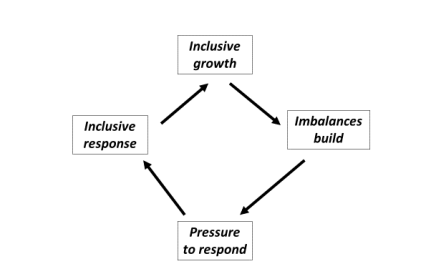
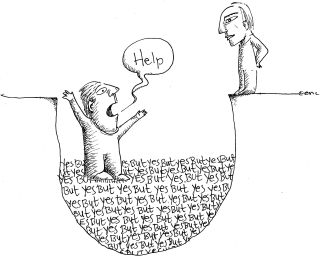 New measurements confirm that governance systems matter for learning outcomes. But knowing, in a statistically robust way that systems matter is one thing. Understanding how they matter, and what are implications for action, is another.
 When does a call to ‘work with the grain’ violate foundational ethical commitments? Governance reversals globally have given new urgency to this question; it has recently been posed both in
 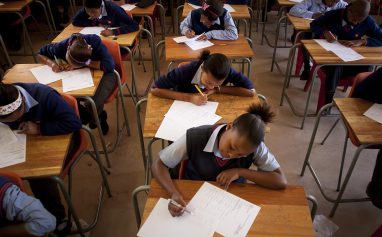 “Madness”, Albert Einstein has been quoted as saying, “is doing the same thing again and again, and expecting a different result”. This is a not-unreasonable description of the discourse of how to improve South Africa’s education system (and systems in many other countries, too). Study after study gets conducted; many show, in one carefully controlled setting or another, how this-or-that intervention demonstrably improves learning outcomes. Then comes the inevitable corollary proposal: “Fix the bureaucracy – and have it scale up the ‘this-or-that’ intervention – and the learning crisis will be over”.
 Crusades can over-reach – and anti-corruption crusades are no exception. The news offers an ongoing flow of whiplash-inducing examples. Here are two: the news of the near-landslide plurality (just short of an absolute majority) of votes won in Brazil’s presidential election by right-wing,


