Protecting the guardrails of America’s democracy –  some lessons from South Africa

Now what? Four weeks into the Trump administration, a wrecking ball threatens to wreak havoc with millions of peoples’ lives. A  sense of urgency is in the air. Indeed, we urgently need to bear witness to the emerging scale of disaster.  But holding open the door to a hopeful future needs more than urgency.  It needs  clarity of goals, tactics and  strategy – plus a longer-term vision that looks beyond the immediate crisis. To help bring clarity, it can be helpful to make comparisons.  

In seeking to understand America’s challenges,  I have long looked to South Africa’s decades-long struggle to establish and sustain its own democracy. A recent effort contrasted how polarization and inequality interacted. My task here is  the more immediate one of seeking fresh insight into how a democracy can respond to a wrecking ball taking aim at its institutions. The search yielded  four lessons of relevance to America’s current moment. First:

  • For the next 21 months,  the unwavering navigational north star is to get  to the  November, 2026 midterms with the machinery of electoral democracy still fully functional – avoid being knocked off course by even the most venal provocations. 

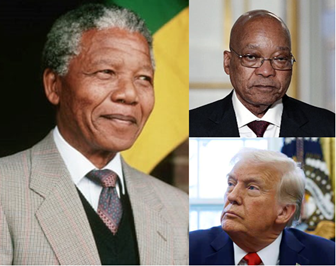
In April 1993, a team of far-right assassins that included a former member of the white apartheid parliament murdered Chris Hani,  a  popular, senior leader of the ANC’s left-wing.  At the time, South Africa’s  recently unbanned African National Congress was in the midst of fraught, on-and-off  negotiations to  end apartheid – but until a new constitution could be agreed on, power remained in the hands of the apartheid-era National Party. When news of the assassination broke, the country erupted in rage; the stage was set for crackdown.  Instead, in a masterful display of statesmanship, Nelson Mandela went on national television and successfully redirected attention to the journey ahead. The country’s first democratic elections, held in April 1994,  resulted in a massive ANC victory, with Mandela sworn in as national president.

Decades after its inspiring transition from apartheid to democracy, South Africa confronted a new challenge to its constitutional order – and again demonstrated the centrality of  the electoral process to its defense.  Jacob  Zuma, the ANC leader who acceded to the presidency in 2009,  was increasingly using state power in personalized and often corrupt ways, under the guise of a populist anti-elite agenda. Given the ANC’s continuing electoral dominance, defeating Zuma’s successor in a national election (Zuma himself was term-limited….)  was not a plausible strategy.  In selecting a successor,  the ANC itself had to decide whether to re-embrace the democratic constitutional order. This it did. Cyril Ramaphosa, a central protagonist in the crafting of the constitution in the 1990s,  won the November 2017 (intra-party) electoral contest to become Zuma’s successor by a hairs-breadth –   and then decisively won the 2019 national elections.   Ramaphosa’s victory not only underscores the centrality of elections in pushing back against tyranny, how he won underscores the relevance of the second and third lessons.

The second lesson is largely familiar:

  • Leveraging checks and balances  lays important, necessary ground for victory in the struggle against tyranny – but its victories are not in themselves decisive.

In the 2010s, South Africa’s defenders of democracy brilliantly used checks and balances institutions to push back against state capture. The pushback included brave, determined inquiry from the ‘Public Protector’, an official, but arms-length  agency with a mandate to investigate abuse of power; investigative journalism, underpinned by university-based researchers whose efforts added to the credibility of efforts to document what was happening; and a high-profile  public inquiry led by the Deputy Chief Justice of the country’s supreme court.  Four weeks into the Trump administration, similar momentum is building in the United States. The courts are intervening; elected Democrats in the House and Senate are becoming increasingly emboldened and forceful in mobilizing resistance; citizens are spontaneously coming out in support.  But experience in South Africa and elsewhere shows that more is needed.

The result of a too-narrow pre-occupation with tactical victories can all-too-easily be to win many battles, but lose the broader war.   Hence the third lesson:

  • Keeping democratic space open requires a coalition that is broader than the usual fault lines of political partisanship –   a  sense of urgency and willingness to act not only from ‘natural’  opponents but from elite actors for whom it is more expedient to stay silent.

It takes courage to override expediency and party loyalty and lead with principle. In 1930s Germany, expedient silence (indeed, often, tacit support)  on the center-right opened the door for Adolf Hitler, and all that followed. 2010s South Africa, by contrast, saw some inspiring examples of courage. Veteran leaders of the ANC (including Pravin Gordhan; Ahmed Kathrada;  and  Mavuso Msimang to name just a few) were willing to override lifetimes of loyalty and take a high-profile principled stand against state capture in favor of constitutional democracy.  In the USA, principled Republican leaders  who took a stand against Richard Nixon in the early 1970s showed similar courage. But in today’s United States, aside from a few lonely voices, the silence from the center-right is deafening.

The combination of a multi-front effort to leverage checks and balances institutions and mobilization of a broad coalition may be enough to eke out an electoral victory – but it has not been enough to decisively turn the tide. Both the 2019 South African and 2020 U.S.,  elections enabled a temporary pause in attacks on constitutionalism. But more than a pause was needed. Hence the fourth lesson:

  • A vision of democratic renewal is key to a decisive victory against encroaching tyranny – more than short- and medium-term band aids are needed.

On offer in South Africa’s 1990s “rainbow miracle” was not only formal constitutional change, but hope – “a better life for all” as per the African National Congress’s campaign slogan. Indeed, after decades of stagnation, the first fifteen years of democracy witnessed a steady acceleration of economic growth, and a reduction in the incidence of extreme poverty. But by the time Zuma acceded to the presidency, the promise had reached its sell-by date. Ramaphosa promised only a return to the earlier formula, and his presidency has turned out to be a time of muddling through. Viewed from the vantage point of 2025, parallels with the Biden presidency are clear.

For an electoral victory to result in a decisive political realignment, it needs to build credibility on two fronts – inclusion, and public governance. South Africa’s early successes centered around an expansive “we” – underpinned by an economic program that addressed many everyday concerns of working people. In the wake of 2024’s electoral shock, the Democratic Party in the U.S.  seems increasingly to be learning the lesson that the cobbling together of multiple disparate parts does not add up to an expansion vision of ‘inclusion’. To  win credibility with the electorate the message needs both  sharpening  and  consistent championing by credible messengers.

As for  the capacity to govern, a distinctively American challenge is to break through the relentless drumbeat of political demonizing of the public sector. But the challenge goes well beyond messaging.  All-too-often,  the result of a progressive vision of governance in which one good thing is added on top of another is way less than the sum of its parts – each good thing is accompanied by a small dose of administrative process, and the cumulative sum of the good things is sclerosis. The Wall Street Journal’s Peggy Noonan makes the point pithily:

“A word to Democrats trying to figure out how to save their party…. Most of all, make something work. You run nearly every great city in the nation. Make one work—clean it up, control crime, smash corruption, educate the kids. You want everyone in the country to know who you are? Save a city.”

In 1860 when Abraham Lincoln became president, he described America as “the world’s last best hope”. That is how it felt to me when I came to this country almost five decades ago. Is the vision of America as a beacon to the world coming to an end? Is there no alternative to angry, chauvinist isolationism? Making it through the present moment without deepening disaster requires tactical resistance – but it also calls for more.   We also need to raise our sights. What kind of country do we want the United States of America to be?

Ethiopia and the World Bank in the 2000s

The role of donors in Ethiopia has emerged as a focus of an ongoing debate on authoritarian aid. (See here and here) As part of a broader wariness of where  moralizing hubris  can lead, I made a decision a few years ago to focus my work on the challenges of ‘messy democracies’ (which, evidently as of 2021, includes the USA and other Northern countries). Though I don’t intend to engage with the current controversy, between 1999 and 2008 I was quite centrally involved with the World Bank’s engagement in Ethiopia, especially from a governance perspective; I subsequently  wrote about that experience. Here, as a contribution to the current debate, is the relevant extract from my 2014 book, Working with the Grain.

“Ethiopia – planting seeds of bottom-up accountability.  Between 2000 and 2010, aid inflows averaged about 5-8 percent of total annual income (in the range of $1 billion annually) – and accounted for about one-third of public expenditures. When it comes to aid, mutuality often  plays out in a troublingly superficial way: political support from citizens of donor countries depends importantly on the aid effort’s ability to evoke among ‘Northern’ taxpayers a warm feeling of doing the right thing.

Prior to Ethiopia’s 2005 election, the country had become a poster-child of ‘good’ aid. Back in the 1970s, along with Bangladesh it had been the country where images of starving children had evoked a rash of ‘live aid’ rock concerts and feel-good donations. For a while, the brutality of the  repressive military Derg regime undercut the narrative. But finally, with the emergence in Meles Zenawi of  a new-generation-leader committed to development, the narrative could come together.  The strength of   commitment by donors to Meles Zenawi’s government was evident both in the amount of aid, and in the form in which it was given. Ethoiopia became a leading example of new, cutting edge approaches to development aid. 

A common criticism of aid is that it supports gold-plated enclaves (complete with the donor country nameplate)  in the form of  initiatives which destroy the capacity of national governments by undercutting the recipient government’s ability and willingness to make choices, and by  luring the most talented people away from the public sector. In response to this criticism, in countries where governments seemed committed and capable, donors increasingly were moving to provide aid as annual ‘budget support’ for the country’s expressed priorities. (This isn’t quite the blank check it seems. It provides a platform for in-depth dialogue between donors and recipient governments as to priorities and performance. As champions of budget support pointed out, having some influence over all of government spending was surely likely to do more to combat poverty than having direct control over what rarely amounted to more than 5-10 percent of the total spend.) Meles’s commitment to development, plus the country’s track record of managing resources prudently, had made Ethiopia a major recipient of budget support.

But in the violent aftermath of the 2005 election, the positive story came undone. It became politically impossible to write an annual budget support check; that would signal seemingly unqualified support for the Meles regime. Instead, the clamor arose for donors to withdraw support entirely from Ethiopia. What was to be done? Donors adopted a two-part response.

One part was a fig-leaf of sorts. In place of budget support, and without cutting aggregate levels, donors embraced a new aid model for Ethiopia: the protection of basic services. Formally, there were two large differences between the old and new models. Aid no longer was made available for general purposes: it was specifically targeted to support a scaling-up of social sectors by paying the costs of teachers and health workers. Better yet, in Ethiopia’s radically devolved formal constitutional arrangements,  education and health were the functions of regional governments, the support provided was no longer going directly to Meles. In practice, though, budget revenues that aren’t used for one thing can be used for another. Provincial levels had no independent revenue-raising capabilities, and teachers and health workers were already being paid indirectly by the center through inter-governmental transfers. But budget fungibility is an argument  for technicians. Viewed through a more political lens, the advantages are large vis-à-vis donor country electorates of reframing aid  in terms of direct support for teachers, nurses and doctors.  

The second part of the donor response also might initially have seemed symbolic – though it was especially difficult to negotiate with the Ethiopian government. In return for large-scale continuing aid support for the provision of basic services, donors pressed hard for the introduction of a variety of bottom-up mechanisms to enable citizens and civil society organizations to monitor whether public resources indeed were delivering on their intended purposes.

Implementation was a long, slow process; for four years, there were repeated disagreements between donors and government, and associated delays. But, remarkably, the Ethiopian authorities themselves increasingly have embraced the bottom-up approach. As of 2012, over 3,000 officials from across the country had been trained in how to design and implement good practices in local-level financial transparency and accountability; over 50,000 local leaders have been sensitized as to how they can proactively monitor public spending; over 90 percent of all local governments were posting budgets.

To be sure,  no one would confuse contemporary Ethiopia with a vibrant, multi-party democracy along the lines of contemporary Korea.  Meles’ regime was not one to make the same mistake twice. Going into elections in 2010, there was little doubt as to the outcome. In the event,  the EPRDF won close to two-thirds of the vote, and 99% of the seats in national and regional parliaments. But the journey of development along the dominant trajectory can be a long and surprising one. In the early 1960s, no one would have predicted that forty years later Korea would be a thriving multi-party democracy. Whether Ethiopia can sustain a further two decades of stability and broad-based, inclusive economic growth is  enormously uncertain – and Meles’ untimely death only underscores the risks. But if Ethiopia is able to remain on its current trajectory, the seeds of better governance which have been planted over the past two decades – a de jure democratic constitution with strong formal checks and balances; and a de facto willingness to explore how bottom-up transparency can help hold public officials accountable for performance – could yet be early harbingers of a profoundly transformed polity and society.” (2014; pp. 65-67)

Learning from South Africa ‘s Emerging Arc of Political Renewal

cyril rampahosa

Jacob Zuma has now announced his resignation! In coming weeks I intend to write more about how, remarkably, South Africa has begun to break the momentum of state capture – a necessary condition for moving forward with the next generation of challenges of building a genuinely inclusive, thriving society. For now there are four aspects of South Africa’s success which I want to highlight (and use to contrast with the parallel challenges confronting the USA….. ).

The first is straightforward: the South Africa experience provides a powerful affirmation of the strengths of having in place the checks and balances which underpin constitutional democracy – including an independent judiciary; determined, high quality investigative journalism; and a robust civil society. These are, of course, also American strengths.

Second, the process demonstrates the strengths of South Africa’s political discourse — ongoing engagement across the spectrum, debate, mutual learning, and (to a striking degree) convergence around a sense of both truth and of the broader national interest. I worry deeply that none of this seems to be evident in the USA.

Third, the process has been underpinned in recent years by strong, principled leadership, committed to values forged in political struggle, and sustained courageously by officeholders in government and outside in the face of pressures to conform. (Pravin Gordhan and Nhlanhla Nene are just two of the many who have played such a role.) Such leadership has been key to enabling a process of renewal to (hopefully) take root within the ruling African National Congress. I worry deeply that, with a few honorable exceptions, very few such leaders are evident in the United States – with the gap especially stark (indeed, perhaps terrifyingly so….) among the representatives of the majority Republican Party in Congress.

Fourth is strategic patience – a sense of the ‘long game’. Certainly, there has been no shortage of expressions of outrage, and attacks on political leaders for their purported cowardice in failing to condemn the ‘latest’ outrage. But South Africa’s success has been built on a careful reading of the logic and rules of power which govern leadership selection, especially within the ruling ANC. (I note especially, without going into the details, the strategic patience of Cyril Ramaphosa and Gwede Mantashe.) In the end, the time for confronting predatory forces arrived – on the right terrain, and with the right preparation. The result is the potential for a renewal of hope.

In the South African case the relevant terrain was the contestation over the next generation of ANC leadership. In the USA, with the Republican Party seemingly hopelessly compromised, the relevant terrain will be the mid-term elections of 2018. Is the ground being equally well laid? Are the coalitions converging around what is true, around common values, a shared commitment to America’s ‘civil religion’ — around a center that can hold, that can decisively repudiate populist, predatory threats? Or are we witnessing a mutually reinforcing embrace of the politics of outrage? South Africa offers a potent, hopeful example of the power of patience.

Civic Enterprise

american dreamYES!!! A fresh, extraordinarily promising approach to closing the gap between the world of technocracy and the places where American democracy actually happens.  Anne-Marie Slaughter’s landmark new contribution offers a vision for transforming think tanks into civic enterprises. The piece is long; the extracts below highlight its main points. The full article is very much worth reading. (Here is a link).

“We need a new process of public problem solving that can reconnect government to citizens by getting outside the Beltway, engaging with the problems of communities in those communities, and working to develop ideas together and turn them into action.

“We propose a new model of civic enterprise. ‘Civic’ because it engages citizens as change makers—conscious members of a self-governing polity that expects government to be at least part of the solution to problems that individuals cannot solve on their own. And ‘enterprise’ because of the energy and innovation involved in actually making change on the ground….. The Progressive Era model of think tanks as extensions of technocratic governance is no longer sufficient to make meaningful, large-scale progress in resolving public policy problems….

“We find that in today’s America, a great deal of the most meaningful change is happening far outside Washington, in cities and towns across the country. It is happening in places that are tackling the deeper problem of democratic distrust and disaffection by re-forging the links between citizen demand and government response. It is this spirit that animates the new forms of public work and institution building that we characterize as civic enterprise…..

“Civic enterprise does not replace independent policy research—on the contrary, it is an incubator to engage community stakeholders to refine the ideas and turn them into action….. Three hallmarks will distinguish the work:

  • The first is the engagement and amplification of new voices….. The problem is evident across the Washington policy ecosystem: the people most engaged in thinking, regulating, and legislating do not actually represent the citizenry……Connecting government to citizens requires filling the political stage with a more inclusive cast: ethnically, racially, geographically, and economically…..
  • The second is the collaborative development of ideas….. We must create opportunities for participation, knowledge exchange, and learning that find citizens thorugh a decentralized network….the civic enterprise policy development process will be intentionally iterative….
  • The third is dedication to broad public debate and education…. In our traditional model, we public specialized reports aimed at decisionmakers. For a civic enterprise, content is a tool to help people move from being informed to being active….to expand beyond the language of politics and policy.“

It is an ambitious project—nothing short of rethinking the relationship between the people who make public policy and the people for whom they make it. At our most optimistic, we can see a bipartisan civic movement emerging with the same reach and impact the Progressive Movement once had. We cannot see all the ways that civic enterprise will evolve. But we are certain that thinking alone is not enough.” (And here is another link to Anne-Marie Slaughter’s piece.)

Public sector governance — what we (choose to) see shapes what we get….

storm-rainbowDiscourses on public sector governance, in South Africa and elsewhere, illustrate powerfully the insight of behavioral psychologists that ‘framing’ matters. If our framing is inconsistent with the way things actually are, we are doomed to disappointment and unhappiness. But frame in a way that responds to reality, and opportunities abound for active, worthwhile engagement.

South Africa’s daily headlines and frustrations dispirit – from electricity blackouts, to corruption in the procurement of railway engines (including allegations that the engines purchased did not match the specifications of South Africa’s railway system); to reports that neglect of maintenance could lead to the collapse of water utilities in over half the country’s utilities; and that teaching jobs can be bought (including via threats of violence to ensure that a desired position becomes vacant).

As of 2014, only 34 percent of the country’s citizens reported that they had confidence in their government, down from 66 percent in 2007. While the country is hardly alone in its lurch into pessimism (on average, as of 2014, only 40 percent of citizens in countries the club of high-income democracies, the OECD, had trust in their governments), South Africa’s decline in confidence is among the most rapid anywhere. In a complementary blog post I explore how the country’s current extraordinarily sour, conflict-prone public discourse has its roots in economic and psychological deformations inherited from the apartheid era. This post focuses narrowly on public sector governance.

Notwithstanding the evident challenges, might pessimism about the performance of South Africa’s public sector be overdone? Without wishing away the challenges, might there be alternative ways of framing that point towards creative entry points for strengthening public sector performance?

To answer these questions, it is helpful to disentangle two arguments that often are conflated:

  • that a predatory political leadership can provoke a downward spiral into disaster; and
  • that good governance is necessary for development.

The first argument is straightforward — and, as recent dark prophecies emphasize, all too plausible for South Africa. (I will return to it at the end of this post.) But the broader ‘good governance’ argument does not withstand scrutiny — either empirically or conceptually.

Consider first South Africa’s empirical track record. Aggregate indicators indeed show that government effectiveness in South Africa rates well below high-income countries, with substantial decline between 1996 and 2014. Even so, as shown in the accompanying table of  South Africa’s comparative governance relative to other middle-income countries, as of 2014 South Africa’s government effectiveness rated at the high-end for relevant comparators — on a par with Mexico and Turkey, and well above Brazil and Thailand. In a recent paper for the DFID-funded and University of Manchester led Effective States and Inclusive Development (ESID) research programme, Alan Hirsch, Ingrid Woolard and I documented major gains between 1994 and 2010 in the provision of public services to the poorest 40 percent of the country’s population. And, to further confound the drumbeat of daily headlines, here are some recent examples of public sector effectiveness:

  • The successful procurement from independent power providers of well over 5,000MW of renewable (wind and solar) electricity generation capacity between 2011 and 2013, an investment of over US$15 billion, with very large declines in unit prices over four rounds of competitive bidding (e.g. for solar, from from $0.35c/kilowatt hour in the first round to under 8c/kwh in round four)   – transforming South Africa from a laggard to a leader globally.
  • The leveraging of the Expanded Public Works Programme  to create over one million work opportunities in 2014 (the equivalent of about 400,000 low-income jobs) and to integrate these into ongoing programmes of support for the social sectors (in Limpopo), for rehabilitation and maintenance of rural roads (in the Eastern Cape) and for environmental rehabilitation (via, for example, the internationally renowned Working for Water, Working on Fire, and Working for Wetlands programmes).
  • Ongoing gains in the outcomes of basic education in some provinces (e.g. the Free State), and persistent examples of high-performing public schools even in provinces (such as the Eastern Cape) where the broader environment for educational performance remains weak.
  • High-quality, proactive regional economic development strategies in both of South Africa’s two leading regional economic hubs – the Western Cape and Gauteng. And
  • A four-fold increase between 2009 and 2012 in the number of people receiving anti-retroviral therapy – with over 2 million people receiving life-saving anti-retroviral medications in 2012, delivered through a supply chain that reaches effectively into the most remote parts of the country, and alongside interventions that successfully have lowered rates of HIV-prevalence.

Why, given these results, is the tone of the discourse so unrelievedly negative? Part of the reason is that most South Africans (whether of the political left or right) implicitly conceive of the public sector in top-down, hierarchical terms. Good leaders get the policies right, and then direct the bureaucracy to deliver. Viewed through this lens, all is either won or lost at the top of the hierarchy – ‘a fish rots from the head down’ in the reigning metaphor.

More broadly, the ‘good governance’ paradigm implicitly frames public performance as ‘all’ or ‘nothing’, with little scope for shades of gray. However, as recent landmark contributions by Francis Fukuyama and Douglass North underscore, this pre-occupation with good governance is inconsistent both with the evidence of how results are achieved in many developing countries, and with the historical record of all contemporary high-income countries. (Note, though, that as I explore in an accompanying blog post it can, for some, have a paradoxical ideological function — a seeming embrace of ‘good governance’ can, for those on the political right, offer a marvelous opportunity for ‘crocodile tears’, for seeming to wish that government can do better, but then sorrowfully concluding that it cannot.)

Letting go of a narrowly, top-down framing of how the public sector works opens up space for identifying potential entry points for positive action that can help build a thriving, inclusive society. Developing democracies can indeed thrive – but, as a review of the track record over the past fifteen years underscores,  almost everywhere the process looks very different from a ‘best practice’ vision of how hierarchy is supposed to work .  Rather, in these messy settings results often come via ‘islands of effectiveness’.

Islands of effectiveness emerge when stakeholders take the initiative: from public entrepreneurs within government going to the limits of their formal mandates, and sometimes beyond, in their efforts to make a difference in peoples’ lives; from multistakeholder partnerships capable of trumping predatory pressures . (Working with the Grain explores these processes in depth.) As a landmark study shows, this combination of public entrepreneurship and multistakeholder partnership was key to the gradual, cumulative transformation of the patronage-driven American bureaucracy of the 1880s into (by the early 1920s) a more performance-driven organization. It also has underpinned many of the positive outcomes along the lines of the South African examples listed above.

There is, however, a crucial caveat. Predatory politics and islands of effectiveness can coexist for a while, but not over the long term. Robust coalitions can resist everyday predators, but they cannot indefinitely withstand all-pervasive predation emanating from the top of the political order. Combatting that kind of predation is, ultimately, the task of politics – of the choices political parties make as to their leaders, and of how citizens respond to those choices. It is a task for activists – but it is not the only task. Even in the midst of a messy politics, there is scope for supporting the emergence of initiatives that can make a difference in peoples lives, and for celebrating gains where they are made. Approaches that throw out the baby with the bathwater may or may not be sufficient to get rid of the bathwater – but they will almost surely kill the baby.


Reframing democratic development — vision, strategy and process

no_easy_walk_to_freedom How,  in today’s complex and uncertain times, can those of us working at the interface between governance and development sustain  what the great twentieth century development economist, Albert Hirschman, called  “a bias for hope”?

In two recent blog posts (click HERE and HERE)  I took stock of the evidence as to the extent of governance improvement between 1998 and 2013 among 65 democratic countries (the large majority of which made their initial transition to democracy subsequent to 1990). The results left me feeling even more skeptical than when I wrote Working with the Grain as to the practical relevance of maximalist “good governance” agendas. We need an alternative approach.

To tease out an alternative, it is useful to begin with the classic three-part tripod for orchestrating change – clarifying the vision, developing a strategy for moving towards the realization of that vision,  and delineating step-by-step processes for facilitating implementation. Using this lens, the classic ‘good governance’ discourse turns out to be all vision, empty of strategic content, and counterproductive vis-à-vis process.

‘Good governance’ generally directs attention to the destination, to   how a well-functioning democratic society is supposed to work — and seeks to motivate by cultivating dissatisfaction with the gap between the destination and the way things are. Yes – electoral accountability, a strong rule of law, a capable public sector, robust control of corruption, and a ‘level playing field’ business environment are all desirable.  But the institutional underpinnings for many of these are demanding – and advocates generally stop short of laying out any practical program for getting from here to there. With no proactive agenda for action, the all-too-common result is to end up fuelling  disillusion and despair, rather than cultivating hope.

There is, though, an even deeper problem with maximalist advocacy: it sells democracy short. In its essence, what democracy offers – and authoritarian alternatives do not – is an invitation to citizens to work to shape their own lives and to participate peacefully in the shaping of their societies, according to their distinctive visions of freedom and justice.  This journey is a challenging one – with much democratic ‘messiness’, and corresponding disappointment along the way. But no matter how challenging the journey, once the invitation to engage has been embraced, the personal dignity it offers cannot be taken away. This invitation, not empty guarantees of success,  is at the core of the democratic vision — its inspiration, its source of sustainability.

This brings us to process —  the second pillar of the change tripod. In the later stages of his career, Albert Hirschman turned his attention from trying to understand strategies for economic development, to trying to understand  how we thought and spoke about them. His  purpose, he asserted, was: “…. to move public discourse beyond extreme, intransigent postures of either kind, with the hope that in the process….participants engage in meaningful discussion, ready to modify initially held opinions in the light of other arguments and new information..”

 The renowned Vietnamese Buddhist monk, Thich Nhat Hanh, points to why the quality of discourse matters greatly.  “Peace”, he suggested  “is every step:Freedom is not given to us by anyone; we have to cultivate it ourselves…. here and now, in ourselves and in everything we do and see…. (in) every breath we take, every step we take….. The question is whether or not we are in touch with it. We need only to be awake, alive in the present moment.” Insofar as democracy is an affirmation of dignity, its promise is not accessible only when some distant destination is reached. Its potential is also here and now — realizable through a process that, in and of itself, is an affirmation of that dignity.

Dignity also is central  to the third leg of the tripod for the orchestration of change –a strategy for democratic development which has the affirmation of human dignity at its heart. As an alternative to what one might call ‘Big-G’ reforms of governance systems,   Working with the Grain (Oxford, 2014) lays out a ‘small-g governance’ strategy for deepening democracy among countries which have formally embraced democratic forms, but whose practices fall far, far short of a normative ideal. A ‘small-g’ strategy focuses on a search for concrete gains vis-à-vis specific problems – and emphasizes the pursuit of these gains through active citizenship, through participation and engagement among equals.

The immediate goal of a  ‘small-g’ strategy is to nurture “islands of effectiveness” — to identify entry points for focused engagement among a variety of stakeholders with high-powered incentives to see the outcomes achieved.  Working with the Grain explores in depth a variety of potential entry points:

  • Public entrepreneurs at multiple layers of government can foster ‘islands of effectiveness’ even within a broadly dysfunctional public service —   focusing on achievement of a very specific public purpose (better schools, better infrastructure, less stifling regulation), and endeavoring to build within their domain both a team with the skills and commitment to achieve that purpose, and the network of external alliances needed to fend off opposition.
  • Civil society groups can forge a middle path of engagement —   neither locking-in to confrontational action, nor surrendering principle in search of the next donor- or government-funded contract, but rather focusing on the quality of service provision, both partnering with providers and holding them accountable for how public resources are used.
  • Northern activists can seek eyes-wide-open partnerships with globalized firms – anchored in collectively designed and transparent, mutually monitored commitments to, say, rein in bribe-giving, or to target exploitative practices vis-à-vis environmental protection, labor standards, and the extraction of natural resources.
  • Scholars and practitioners can monitor governance in ways that encourage a long view – foreswearing overheated rhetoric in the face of year-to-year changes in indicators of corruption, the rule of law, or government effectiveness, and using monitoring to provide a platform for nurturing constructive dialogue on trends, identifying lagging areas, and exploring how they might be addressed.

Gains from any individual initiative might initially seem small, but individual islands can pull a wide variety of related activities in their wake, adding up over time into far-reaching economic , social and political change – while affirming, at each step along the way, the positive promise of democratic development.

Vision, process and strategy become a mutually reinforcing pathway of democratic development. The vision brings the promise of dignity to center stage;  the process is one that systematically affirms that dignity; and the ‘small-g’ strategy  offers ample opportunity for the practice of ‘active citizenship’ for engagement among equals. Taken together, these elements perhaps indeed offer a new basis for sustaining Albert Hirschman’s ‘bias for hope’ — but in a different intonation from that usually evoked by democracy’s advocates.

The usual intonation of democracy advocacy is a drumbeat of exhortation, of a world on the march to some more perfect destination on the horizon. But, as per Albert Hirschman and Thich Nhat Hanh, hope can also come in a quieter pitch: softer voices, calming rather than raising the temperature, searching, encouraging deliberation, reflection, co-operation.  Over the past two decades, democracy advocates have been sobered by the messy complexity of what it takes to get from here to there. Perhaps going forward, it is not in the drumbeat of exhortation but in hope’s softer, quieter intonations that we will find our inspiration – and our staying power.