“Only human” – the work of transformation (inner and economic)

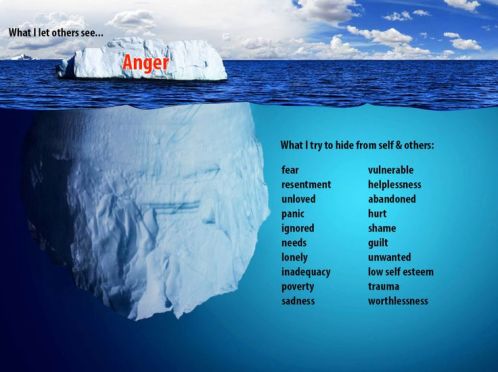
anger-icebergSouth Africa’s  challenges of transformation continue to be immense. The country has among the world’s highest levels of both inequality, and long-term unemployment. Beneath these, as an extraordinary recent piece by Jay Naidoo powerfully reminds us,  is a perhaps even more daunting challenge – the inner work of becoming free of unconscious habits of mind conditioned by centuries of privilege and entitlement on the one hand, and disempowerment on the other.  Our failures to address effectively the inner challenges are wreaking havoc with civic discourses, not only in South Africa, but in many other places as well.  The result is that the economic challenges continue to fester, with rising risks of a downward spiral.

Along the road to South Africa’s liberation, Jay Naidoo (Jay, as he is known by all who have worked with him) has been the General Secretary of the Congress of South African Trade Unions, a leader of the internal democratic resistance to apartheid (the United Democratic Front), the lead architect of the African National Congress’s Reconstruction and Development Plan, and a Minister in Nelson Mandela’s first Cabinet. In recent years, he has been a consistent voice for ethical, participatory inclusive activism – turning his back on a dysfunctional politics, and devoting his energies to developmental activism from within civil society.

Here is how he describes his personal inner challenge:

“I grew up in racist South Africa. I was angry. I was humiliated. I felt inferior. I was almost broken. I was defined as a non-white, an inferior person, in the lexicon of apartheid. The tragedy is that I indeed felt inferior to white people, just as many people of colour still feel, even today. I wanted either to fight those who were doing this to us, or to give up and drift on to the inevitable path of social delinquency that many hopeless souls seek so often…..And yet, a bigger part of me wanted to do neither of those things; instead I dreamt of changing the matrix, altering the system.”

As Steve Biko, putting it in the political language of the black consciousness movement, reminded us, the psychology of the oppressed and of the oppressor are two sides of the same coin:

In time we shall be in a position to bestow on South Africa the greatest possible gift – a more human face….. As a prelude, whites must be made to realize that they are only human, not superior. The same with blacks. They must also be made to realize that they are also human, not inferior…..”

What does learning to be ‘only human, not superior’ entail? Jay tells this story:

“A few months ago I had to queue for my passport in Johannesburg. I love joining queues. You feel the pulse of the nation. With a great bunch of mainly young people (albeit all of colour), we were having an animated discussion on the state of the nation. One was a dancer who had trained in New York, another was a psychologist at Chris Hani Hospital and the other a personal banker at a major bank….A white woman just behind me, already an earful of complaints piercing our rich discussion, deliberately raises her voice, “This country is going to the dogs. I have flown from London to come and pick up my passport. You are hopelessly inefficient.”

At which point, not knowing better, but happy at the level of service, I said, “Well, madam, if you don’t like our country and believe all has gone to the dogs, why do you want a South African passport?”

If eyes could shoot daggers I would have been dead on the spot. Ignoring her, I went into the offices, continued my conversation with the earnest young people, and picked up my passport. As I was leaving I was surrounded by a group of white women she had mobilised, who, spewing vitriolic racial abuse, shouted:

“Go back to Bangladesh. Go and die there you f***king ***.”

These were middle-class whites. These were angry, affluent women in fancy cars. In South Africa, just scratch skin deep and the vile explodes.”

As a progressive ‘white’ person, I recoil at the way in which Jay was confronted. But I have come to understand that there’s no escaping the reality that my sense of efficacy in the world is, in part, a consequence of being born into privilege, and the conditioned presumptions as to how the world works and my ‘rightful’ place in it that accompanied this privilege.

“How” Jay asks, “do we build a new process of dialogue that will open the way to a road map on the contentious issues facing us as a country? How do we build trust? How can we listen to each other?”

Absent awareness, as the graphic at the top of this piece reminds us, our usual default response is anger.  The inner work needed to bring self-awareness to our inherited presumptions – to move from anger and recrimination to listening and mutuality — is daunting. But  the world is offering us (in Europe, in the United States, in the Middle East, as well as in South Africa….) a preview of what the alternative looks like.  Read Jay’s piece! We have work to do…..
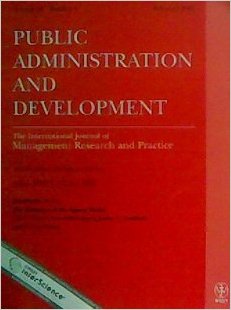
‘Governance Reform: Getting the Fit Right” — a short synthesis

pubadmin and dev

A short, analytically-oriented version of my core argument in Working with the Grain has now been published  in the peer-reviewed journal, Public Administration and Development. The article is entitled, “Governance Reform: Getting the Fit Right”, Vol 35, issue 4, pp. 238-249. Here is a link to the journal, and the article abstract. The journal is behind a paywall. So here is a link to the pre-publication version of my short synthesis article.

KEEPING THE LIGHTS ON – Workable and unworkable approaches to electricity sector reform (WWG implementation series #5)

electricity high wireTwo decades ago, when I was working on utility sector reform we knew the answer. Here (using the example of electricity) is what it was: unbundle generation, transmission and distribution; introduce an independent regulator; rebalance prices; privatize. Two decades later, we have learned the stark limits of orchestrating reforms on the basis of ‘best practice’ blueprints such as these.

What would a more ‘with the grain’ approach to electricity sector reform look like? To explore this, I asked my Johns Hopkins SAIS and University of Cape Town students to review how a variety of country efforts unfolded in practice – focusing specifically on efforts to introduce private sector participation into electricity generation. Some striking patterns emerged.  Here I contrast South Africa’s experience with those of Kenya, Peru and Lebanon. The former illustrates powerfully the hazards of ‘best practice’ reforms;  the latter point to the promise of  more  incremental, cumulative, with the grain approaches.

In 1997, an official South African report signaled that in 2008 the lights would go out if there was no new investment in electricity generation; the report proposed that the country embark on a far-reaching effort to implement the ‘best practices’ template for electricity sector reform, constraining the dominant parastatal, ESKOM, and turning to the private sector for new investment in electricity generation. In 1998, the government adopted the report’s recommendations. In her richly-researched Masters dissertation (available on the link that follows), Nchimunya Hamukoma detailed what happened next.

Contestation over the agenda among competing factions within the ruling African National Congress and its allies interacted with a hugely-ambitious reform design — one for which almost none of the requisite political, institutional, economic and organizational capabilities were in place. The result was that after six futile years of trying, the effort at restructuring and private participation was abandoned, and ESKOM was given a green light to invest in new capacity. But the six lost years – the result of futilely pursuing an unachievable ‘best practice’ chimera – had an inevitable consequence. In 2008, as predicted, the lights went out.

Kenya, Lebanon and Peru pursued very different reform paths than South Africa. And all have been able to supplement generation capacity via private investment. Here in very brief summary (with links to more detailed papers by my SAIS students) is what happened:

  • In Kenya, initial efforts in the late 1990s to introduce independent power producers were mired in the usual Kenyan controversies of corruption and insider dealing. But, as Joshua Moraczewski details restructuring also resulted in the emergence of strong technical capacity in both the Energy Regulatory Commission and the restructured Kenya Power and Light Company (KPLC). (KPLC remained state-owned, but now focused exclusively on electricity transmission and distribution.) These capabilities underpinned a series of follow-on initiatives. As of 2015, Kenya had successfully attracted 695 MW of private power (making it a leader in Africa), via a process that had come to be regarded as competitive, transparent and effective.
  • By contrast, Peru’s initial reforms were far-reaching. In response to endemic supply shortfalls and brown-outs, then President Alberto  Fujimori used dictatorial powers to undertake a comprehensive unbundling and privatization of its state-controlled utility sector. These reforms failed to attract private investment in new capacity, and in 2001 Fujimori was forced from office. But the reforms had created an island of technical capability within the electricity regulator, OSINERG. – and, as Kayla Renz shows in her paper, when subsequent democratically elected governments moved to attract new independent power producers, OSINERG had the skills that (paralleling Kenya) underpinned a transparent and competitive bid process. The result was entry and investment by over a dozen new private providers, and an additional 2,100 MW of new capacity since 2009.
  • Lebanon is hardly an obvious example of electricity success.  in a fascinating case study, one of my students noted that as of 2014 it was ranked by the World Economic Forum as the second-worst country in the world for the quality of electricity supply. But in 2014, the city of Zahle, the fourth largest city in Lebanon, had had enough – and moved to contract with a private operator to provide new electricity capacity, and integrate it seamlessly with the haphazard public supply. Private generators already on the scene strongly opposed the initiative – and communicated their views by blockading roads, issuing death threats, and vandalizing the facilities of the newly-contracted operator. But a determined coalition of local civic, political and business leaders held firm, winning the support of citizens with a skillful media campaign. As of late 2015, Zahle became the first jurisdiction in the country to provide 24 hour electricity to its residents, with prices 40 percent below those that had prevailed prior to the initiative.

For all of the very large differences between the above three reform experiences, considered together they offer a key insight into what can make ‘with the grain’ reforms successful. The underlying logic was laid out by Daniel Carpenter in his influential discussion of public entrepreneurship. Key is the interaction between two sets of variables:

BUILDING INTERNAL CAPABILITY <=>  NURTURING EXTERNAL ALLIANCES

In different ways, the Kenyan, Lebanese and Peruvian experiences all illustrate the essentials of this formula. In all cases, reform champions began early in the process of change to cultivate internal capacity around an organizational focal point of excellence with strong internal capabilities. In all cases, these capabilities increasingly were recognized beyond the organization itself. And in all cases, external allies (sometimes the private sector, sometimes donors, and sometimes political actors eager to build a reputation for effectiveness) provided a buttress of support that enabled the technically-capable leaders to consolidate their initiatives. (Interestingly, South Africa’s successful post-2011 initiative to contract for over 5,000 MW of wind and solar electricity generation from independent power providers offers a further illustration of the ‘with the grain’ formula at work.)

In sum, a with-the-grain approach directs attention to two questions for reformers of utilities and other public agencies seeking to foster change in ‘messy’ governance settings:

  • Do the proposed reforms facilitate the emergence of a focal point of strong organizational capability, committed to effective performance over the long term? And
  • Does the change process empower external allies, ready to support the organizational champion, and the process of change more broadly?

Viewed from the perspective of technocratic ‘best practice’, these questions are very much secondary to the ‘hard’ challenges of getting the engineering, economic and accountability blueprints right. But viewed from a with-the-grain perspective, they are crucial — not only as guideposts for what to prioritize in initiating change, but also for sustaining the momentum of change over the long haul.

Clear seeing

L_ Superior SunriseHow  can we contribute to a renewal of political discourse? A large hazard for 2016 is that we end up countering  anger, false certainty and hatred with their mirror image, and in so doing fuel a downward spiral. Clear seeing as to the way things actually are offers an antidote to these Gramscian ‘morbid symptoms.

Late last year, spurred on by the truly appalling tone of discourse in the Republican Party’s nomination contest, I wrote three United States-centric blog posts on the ways in which we talk about government. Each of the posts explored one aspect of the theme:

The first post explored the Great-Gatsby-like carelessness of the discourse: “….careless people….. who smashed up things and creatures and then retreated back into their money or their vast carelessness or whatever it was that kept them together, and let other people clean up the mess they had made.”

The second post used the example of the Washington DC Metro to show how carelessness can undermine the performance of public agencies. It described the ways in which  a combination of hubris and inattention resulted in a downward spiral of dysfunction – and offered some thoughts as to how this might be turned around.

The third post used the example of Obamacare to expose the “good governance high standards shuffle” – in which superficially appealing benchmarks of perfection are used cynically to undermine any sense that government can contribute to the public good, even when real gains have been achieved.

(In case you’re interested in a parallel exploration in a different context, in a set of posts earlier in 2015 I detailed how South Africa’s sour, conflict-prone discourse seemingly is destroying Nelson Mandela’s remarkable example of reconciliation and leadership.)

Antonio Gramsci’s famous quote from his Prison Notebooks, written in the 1930s when he was imprisoned by Mussolini’s fascist regime, captures perfectly what seems to be happening in so many parts of our contemporary world:

The crisis consists precisely in the fact that the old is dying and the new cannot be born; in this inter-regnum a great variety of morbid symptoms appear.”

In 2016, may the wisdom that comes from the effort to see clearly help us to turn away from anger and polarization, and thereby renew the possibility of looking to the future with hope, rather than recrimination and despair.

Obamacare and the ‘good governance standards shuffle’

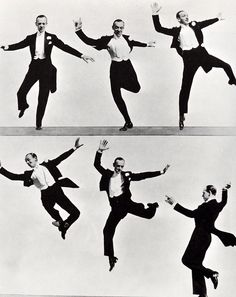
Fred Astaire stillThis post is about Obamacare. It’s hardly news anymore, I know. But my focus is less on the details of America’s ongoing efforts to reform its health sector, than on the way the discourse has played out – making the post  another in my series on the dysfunctional ways in which we speak about government.

In an earlier post, I explored Great Gatsby-style carelessness. This time, I want to introduce a dance move —  the ‘good governance high standards shuffle’, a display of exuberant glee (disguised as disappointment) whenever the real world intrudes, and the outcome of one or another public initiative  is less than perfect.

In the same way that it can be difficult to distinguish between real tears of disappointment, and malicious glee hiding behind crocodile tears, sometimes the ‘high standards shuffle’  can be difficult to detect. Sincerity can all too easily get ‘played’ by cynicism in disguise. While some dancers of the standards shuffle are clumsily obvious,  others have the moves down pat — making it hard to tell whether or not one is being played. (And some exponents might even be unaware that they’re doing the standards shuffle.)

Each year, as part of my teaching at Johns Hopkins School of Advanced International Studies, I select a ‘live’ example of the challenges of public management. A few weeks ago, as I described in another post in this series, I used the case of Washington’s Metro to explore with my students at SAIS the costs of careless in our discourse about government. In 2014, my focus was on the  ongoing American debate on health care reform (also known as “Obamacare”). That debate offers a marvelous  opportunity for seeing the high standards shuffle in action – an opportunity that has not diminished with the passage of time.  So: come dance with me……

An exchange in the United States Congress early this past summer illustrates what the clumsy version of the standards shuffle looks like. Here (as reported by the Washington Post’s Dana Milbank) is  President Obama’s Secretary of Health and Human services, Sylvia Burwell, being grilled by Sam Johnson, Republican Congressman of Texas:

’It looks like to me everything’s going up’” Johnson said, complaining about health care costs. Burwell pointed out that Medicare spending was $300 billion below forecast and that per-capita health-care costs growth has been the lowest in 40 years.

‘Well, but the insurance rates are going up’, Johnson pressed. Burwell said rates are going up at a lower rate than before enactment.

‘Okay’, Johnson said, ‘Let me just change subjects for a second….’ “

But sometimes the moves can be much harder to detect. Let’s go back to October 1st 2013 —  the day the Obama administration launched  the online platform for purchasing (subsidized) health insurance.  A week before the launch White House officials were assuring the public that the start up would be smooth. But that was not what happened. Over eight million people tried to log on to healthcare.gov  in the first three days of the launch. It took hours of trying to get onto the site. In the first month, fewer than 27,000 people actually were able to navigate the site to the point that they could select a plan to purchase.

Then things turned around. In late October, the Obama administration turned to Mr Fixit, Jeffrey Zients, an entrepreneur and former management consultant (including with Bain & Company….). Zients promised that by the end of November four out of five people on the site would successfully complete their efforts to purchase insurance, and that by the end of the year the site would  by working smoothly. He delivered.  By April 2014, 5.4 million people had enrolled for health insurance via the healthcare.gov site, a number which exceeded Obamacare’s proponents expectations.  had succeeded beyond its proponents expectations. As of mid-2015, 16.4 million people who otherwise would have remained uninsured had benefited from one or another aspect of Obamacare – bringing the percentage of the population that remained uninsured down from 16% in 2009 to 9% in 2015.

Yet even if, in broad terms, Obamacare has achieved its objectives, might the messiness in implementation have been avoided? Intriguingly, my SAIS students and I concluded that, for two reasons, it was an inevitable part of the package.

The first reason is technological: Large information technology projects almost never launch as planned, in either the private or public sectors. An October 2013 article in Computerworld reported that only 6.5% of 3,555 projects from 2003 to 2012 with labor costs in excess of $10 million were wholly successful; that 41.5% were failures (either abandoned or started anew from scratch); and that the remaining 52% were challenged (over budget, behind schedule or failing to meet user expectations). Generally, private companies respond to these realities by scaling-up incrementally, with multiple ‘beta’ versions, fixing problems as they arise, and managing expectations along the way.

This brings us to the second reason why the messiness of the launch was likely unavoidable – namely that in the politically toxic environment that prevailed in Washington, an incremental approach was not feasible. Here’s how the political context was described in a November 2013 article in the Washington Post:

“The project was hampered by the White House’s political sensitivity to Republican hatred of the law – sensitivity so intense that the president’s aides ordered that some work be slowed down or remain secret for fear of feeding the opposition…. Republicans also made clear they would block funding…..Tucking [the unit responsible for implementation] within a large bureaucracy, some administration officials believed, [it] would be better insulated from the efforts of House Republicans, who were looking for ways to undermine the law….‘You’re basically trying to build a complicated building in a war zone, because the Republicans are lobbing bombs at us’ a White House official said…”

Reflecting on the Obamacare experience, I am tempted to propose two theorems of public sector implementation in ‘messy democracies’:

  • That start-up will rarely be as smooth as proponents promise, and generally messier than in the private sector. (Even without the Obamacare-specific politics, public organizations need to content with a more complex combination of multiple goals and rigid procurement practices than do their private counterparts.). And
  • That the true measure of public sector capability is the capacity to adapt when crisis becomes apparent – with the moment of crisis creating the opportunity to cut through the fog of political obfuscation and bureaucratic routines. Whether a public organization can rise to the occasion is the true test of what can be achieved, not judgement against a standard of perfection.

But these theorems imply that public action will almost always be vulnerable to the ‘good governance standards shuffle’. Again, the discourse surrounding Obamacare is revealing. Though the facts of what happened seem clear, endless repetition of the ‘failed roll-out of Obamacare’ mantra persist. In the eye of at least some beholders, success (rather than failure) simply is not an option. Evidently, something other than an engagement with the facts is at work. In the case of Obamacare, there’s not much ambiguity as to what it is: a determination, for ideological (or other) reasons to discredit the reforms. Obamacare WILL serve as ‘Exhibit #1’ of what government cannot do, irrespective of the evidence.

To be sure, things can (and do) go wrong; those of us committed to public action hardly have room for complacency. But we would also do well to avoid buying into superficially appealing benchmarks of perfection, thereby inadvertently contributing to the corrosive discourse about government. Rather, we can step back and publicly applaud the cynical performance for what it is – a virtuoso display of the ‘good governance high standards shuffle’!!!!

(Postscript: Here, for your enjoyment, as a bonus for reading this post, is a link to a YouTube video of a true dance master in action – Mr Fred Astaire…….).


Washington’s Metro — The Costs of Carelessness (WWG implementation series #4)

District of Columbia Fire and Emergency workers at the site of a rush-hour collision between two Metro transit trains in northeast Washington, D.C. Monday, June 22, 2009. (AP Photo/Pablo Martinez Monsivais)

District of Columbia Fire and Emergency workers at the site of a rush-hour collision between two Metro transit trains in northeast Washington, D.C. Monday, June 22, 2009. (AP Photo/Pablo Martinez Monsivais)

For those who are so disposed, finding instances of government dysfunction can be like shooting fish in a barrel. But the resulting back-and-forth cycle of blame, defensiveness and recrimination can be a dangerous distraction from the crucial task of  getting public agencies that play a central role in our daily lives to work better. Take the example of Washington’s Metro.

Each year, as part of my teaching at Johns Hopkins School of Advanced International Studies, I select a ‘live’ example of the challenge of public management. This year, Washington’s Metro seemed to be a good case to choose — barely a week has gone by without one or another crisis of Metro management making it into the headlines.

The Metro case demonstrates vividly the costs of carelessness in our discourse about government. (In a complementary blog post, I drill more deeply into how this ‘Great Gatsby’ government discourse works. ) But it also points to a possible way forward — how  a combination of public entrepreneurship and  active citizenship potentially can be leveraged to foster a sustainable turnaround of performance. (For additional detail on the recent Metro experience, here is a link to an article published in the Washingtonian, a few days after I taught the case at SAIS.)

In the beginning, Metro looked like a success story. It opened its doors to passengers in 1976; its 117 miles of track, over 215 million trips per year (and up-front $9.3 billion capital investment) made it the second largest system in the United States. Washingtonians came to expect a streamlined, comfortable, reliable, and aesthetically pleasing commute. In 1987 and again in 1997, the Washington Metropolitan Area Transit Authority won ‘Outstanding Achievement’ awards from the American Public Transportation Association.

But beneath this success something else was incubating.  By 2001, the key management tasks had become routine operational ones – but Metro’s long-time (1996-2006) general manager, Richard White, was not one to sweat the details. “He was a frequent visitor on Capitol Hill…He drove to work….He was part of the regional dialogue about highways and land use and everything else….[he] didn’t spend much time mingling with the rank and file”. The system began to decay. In 2006, the Metro board terminated his contract, three years early.

Then followed an accelerating downward spiral of deteriorating performance in the management of both financial and safety systems:

  • A 2008 internal audit report raised the red flag on poor controls. Richard Sarles (general manager from 2010 to end-2014) reported that “Metro had poor financial controls when he arrived in 2010 and that he had been working to improve them”. (WP 6/7/15).
  • In 2009, two trains collided, killing nine people, and injuring 80. “What you’re finding, when you look behind the curtain, is that there’s been a lot of neglect to safety priorities coming out of accidents,” said Kitty Higgins, a former member of the National Transportation Safety Board to a Washington Post team investigating the accident. “It really is disheartening.”
  • A 2014 audit by the Federal Transit Administration reported extensive safety concerns, including: understaffing in the central Metro train control center (only 34 of 54 authorized positions were filled; those in position enjoyed massive overtime payments); shortages in keeping maintenance materials in stock (so, for three months, replacement brake pads were cannibalized from out-of-service trains); and the non-repair of tunnel ventilation systems (two fans in Metros deepest tunnel location were out of operation for more than six months awaiting repair). It also found “extensive grant-related mismanagement that had gone on for several years”.
  • In January 2015, passengers were left stranded for a half-hour as their train and tunnel filled with smoke, and Metro officials were paralyzed with indecision as to what to do, resulting in one death.
  • The track defect that caused an August 2015 derailment (no one was injured this time) had been identified as an urgent problem in a safety inspection a month earlier, but with no follow-up. Metro’s chief safety officer resigned a month later.

Underlying these performance shortfalls were weaknesses in governance. Four jurisdictions (the District of Columbia; the states of Maryland and Virginia; and the Federal government) plus multiple sub-jurisdictions all have oversight responsibility for Metro, and are allocated seats on the Metro board of directors. Governance by multiple principals is messy; but it mirrors the spatial geography of Washington’s capital city. However, the consequence has been that none of the jurisdictions has taken a broad strategic view of the organization’s challenge.

Board members focused disproportionately on narrower concerns that are of interest to their constituents: where bus stops would be located; operating and closing times; caps on fee increases in the face of revenue shortfalls. Financial oversight also has been shortsighted. In response to the 2014 audit findings of shortfalls in Metro’s financial management, the FTA imposed new layers of restrictions on Metro’s access to federal funds. Punishing a system in the midst of a downward spiral for its continuing shortfalls might offer some satisfaction for ideologically-inclined politicians – but it also is an almost certain recipe for accelerating the decline.

What, then, is to be done? In the short-to-medium-term there is room for optimism that things will turn around. The attention of the Board (and the areas’ politicians) is there. A new CEO has been appointed. The immediate task, though formidable, seems clear: rebuild confidence in the operation – and renew its mandate and finances.

But how to ensure that the cycle described above – rising confidence, de facto autonomy, and then a slide into dysfunction — doesn’t repeat itself? Key, I would argue, is to look again at how we think about the boundary between the spheres of bureaucracy, of politics, and of civil society. Our standard narrative is Weberian, and extols the virtues of an ‘insulated’ bureaucracy. However, as the experience of the latter 1990s onwards underscores, a lack of insulation from pressure for performance has hardly been Metro’s problem.

The past two years have seen a rise in public focus on Metro.  Coverage by Washington’s media has been forthright, detailed. Metro’s riders, too, have increasingly been on the case. A variety of activist groups of Metro riders have been formed. In October 2015 these came together to form the Washington Metro Riders Union. Viewed through the lens of bureaucratic insulation, journalism, social media and civic activism might seem to be noise in the system. But, as Daniel Carpenter has highlighted, high-performing American public sector organizations took root

“…. not at the expense of democratic participation but in a symbiotic relationship with it….….grounded in multiple networks through which agency entrepreneurs can build program coalitions around the policies they favor….. At their strongest, these ties cut across the established lines of class, partisanship and ideology…and enable officials to ground their agency’s reputation in a broader embedment in society.…. The [contemporary] challenge of American statebuilding may be to reengage state bureaucracies with the very civic organizations and social networks in which they once flourished.”

Robert Putnam makes a similar point in his classic 2000 book, Bowling Alone. “American democracy”, he argued:

 “….evolved historically in an environment unusually rich in social capital….. A politics without face-to-face socializing and organizing….would be heard as a muddle of disembodied voices….. Just as one cannot restart a heart with one’s remote control, one cannot jump-start citizenship without direct, face-to-face participation. Citizenship is not a spectator sport.”

Encouragingly, in his first day on the job, Metro’s newly appointed General Manager, Paul Wiedefeld, went on a listening tour among stakeholders – including a commitment to meet with the Riders Union. Is it really too much to hope that in America’s capital city, a city where more words are spoken in praise of democracy than almost anywhere else on earth, public discourse need not be a toxic battleground – but that instead an activated media and citizenry could become an integral part of the fabric of active, effective governance?


The Great Gatsby government discourse — carelessness and its consequences

top hatsI’ve been thinking a lot in recent months about how we talk about government. So, spurred on in part by the truly appalling tone of discourse in the Republican Party’s nomination contest, I’ve decided to write a few United States-centric blog posts on the subject (though I’ll stay away entirely from chauvinistic slurs, or comments about ‘walls’ or ‘roads to serfdom’).

Somehow, in the area of governance, our usual ways of measuring (and honoring) human endeavor don’t seem to  apply. Ordinarily, working and playing in teams teaches us how to master the challenges of  co-operative, collective achievement — which can be way, way harder than striving alone. Governing is a quintessentially collective endeavor, especially in democracies.  Yet all too often  the discourse (and not only by nameless plutocrat presidential candidates…..)  is resonant  of   F. Scott Fitzgerald’s description of Tom and Daisy in The Great Gatsby:

They were careless people…..  They smashed up things and creatures and then retreated back into their money or their vast carelessness or whatever it was that kept them together, and let other people clean up the mess they had made.”

In a series of complementary blog posts — on Washington’s Metro (on this link)   on Obamacare (on this link);, and on South Africa’s public sector (available here) — I explore some consequences of our carelessness in the way we speak about the public sector.  Here I focus on the underlying logic of the conversation. A good place to begin is with the analysis of institutions.

The great institutional economist, Douglass North, defined institutions formally as “humanly devised constraints which govern human interaction”. (‘Rules of the game’ is his classic, informal definition.) Another Nobel-prize-winning economist, Oliver Williamson, built on North’s definition. “Governance”, Williamson suggested, “is an effort to craft order, thereby to mitigate conflict and realize mutual gains”.   Crafting governance arrangements for the public sector is hard – much harder, Williamson emphasizes, than governing a private firm. Yet, somehow, seduced by high-sounding bromides, we  trivialize the challenge. We gloss over the complexities, imply that what is extraordinarily difficult should be straightforward, and end up fueling disappointment and despair. The result is the pervasive distrust of government evident across much of the industrialized world.

The ideas which lead to this hypercritical way of talking about government are deeply rooted, even among protagonists of active government. Here’s the slippery slope  in mainstream economics.  Economics, we learn in the standard canon (or ought to learn, as even a recent book on the pro-market ‘Chicago school’ of economics reminds) walks on two legs. There is the private sphere, where markets offer an efficient, adaptive mechanism of economic and social organization. And there is the sphere where public value differs from private value, so collective action is needed. Standard welfare economics thus takes as its point of departure the distinction between the narrow goal of private profit-seeking and the broader purpose of the pursuit of social welfare. Yet, somehow, even as many of us embrace the goal of pursuing social welfare, its high-minded resonance seduces us into forgetting that what we mean by ‘social welfare’ cannot be derived straightforwardly. It is the outcome of an ongoing, messy, contested political process — one which, in democratic societies, inevitably pervades public action.

As a second example of  the (sometimes) unintentional slippery slope, consider the seeming truism that ‘good governance is necessary for development’. This notion, as Frank Fukuyama reminds us, confuses contemporary ‘Denmark’, with the long, messy journey en route, the journey of ‘getting to Denmark’. (The problem goes deeper than intellectual confusion. As I explore in my blogpost on Obamacare, I  increasingly am convinced that the ‘good governance’ dictum has served de facto as a  tool for discrediting government, one which many of us genuinely committed to public action have unwittingly embraced.)

Here’s how Michael Lipsky, in a  2010 ‘Afterword’ to his 1980 classic book on Street Level Bureaucracy, described the rhetorical trap we fall into:

“In principle, a debate between defenders and critics of an expansive state can be healthy. That debate is rarely engaged, however….. Advocates with an interest in an expansive government role typically focus on the shortcomings of the sector in which they take an interest….If they defend anything at all, they defend the programs they support, but not the set of collective interests of which their favored programs are a part…”

“…The tendency of media to report on government failures but ignore government successes… ensures that when government comes to public attention it is in a negative light. Moreover, elected officials rarely praise government, possibly because they fear being regarded as self-serving. They almost never draw attention to government’s essential role. With conservatives opposing government programs in principle, liberals opposing them in practice, and news about them focusing only on their failings, it is hardly a wonder that the reputation of government is low……  Of course, democratic governments, like all human endeavors, are sometimes flawed…. But of the major institutions in society, only government sustains attacks without effective rebuttal or even measured assessment of the charges…”.

Instead of empty sloganeering (from the left or the right) what is needed for the public sector to thrive is active, ‘with the grain’ engagement with the often-challenging day-to-day realities that are the essence of democratic governance. (More on how this might work in my posts on the Washington Metro and on Obamacare.) Democracies often are messy – but can thrive in the midst of messiness. Messiness and complexity often are part of the package —  inseparable from the vision of human dignity and active citizenship that lie at the heart of democracy’s promise.


Civic Enterprise

american dreamYES!!! A fresh, extraordinarily promising approach to closing the gap between the world of technocracy and the places where American democracy actually happens.  Anne-Marie Slaughter’s landmark new contribution offers a vision for transforming think tanks into civic enterprises. The piece is long; the extracts below highlight its main points. The full article is very much worth reading. (Here is a link).

“We need a new process of public problem solving that can reconnect government to citizens by getting outside the Beltway, engaging with the problems of communities in those communities, and working to develop ideas together and turn them into action.

“We propose a new model of civic enterprise. ‘Civic’ because it engages citizens as change makers—conscious members of a self-governing polity that expects government to be at least part of the solution to problems that individuals cannot solve on their own. And ‘enterprise’ because of the energy and innovation involved in actually making change on the ground….. The Progressive Era model of think tanks as extensions of technocratic governance is no longer sufficient to make meaningful, large-scale progress in resolving public policy problems….

“We find that in today’s America, a great deal of the most meaningful change is happening far outside Washington, in cities and towns across the country. It is happening in places that are tackling the deeper problem of democratic distrust and disaffection by re-forging the links between citizen demand and government response. It is this spirit that animates the new forms of public work and institution building that we characterize as civic enterprise…..

“Civic enterprise does not replace independent policy research—on the contrary, it is an incubator to engage community stakeholders to refine the ideas and turn them into action….. Three hallmarks will distinguish the work:

  • The first is the engagement and amplification of new voices….. The problem is evident across the Washington policy ecosystem: the people most engaged in thinking, regulating, and legislating do not actually represent the citizenry……Connecting government to citizens requires filling the political stage with a more inclusive cast: ethnically, racially, geographically, and economically…..
  • The second is the collaborative development of ideas….. We must create opportunities for participation, knowledge exchange, and learning that find citizens thorugh a decentralized network….the civic enterprise policy development process will be intentionally iterative….
  • The third is dedication to broad public debate and education…. In our traditional model, we public specialized reports aimed at decisionmakers. For a civic enterprise, content is a tool to help people move from being informed to being active….to expand beyond the language of politics and policy.“

It is an ambitious project—nothing short of rethinking the relationship between the people who make public policy and the people for whom they make it. At our most optimistic, we can see a bipartisan civic movement emerging with the same reach and impact the Progressive Movement once had. We cannot see all the ways that civic enterprise will evolve. But we are certain that thinking alone is not enough.” (And here is another link to Anne-Marie Slaughter’s piece.)

South Africa — some elements of inclusive policy and governance discourses

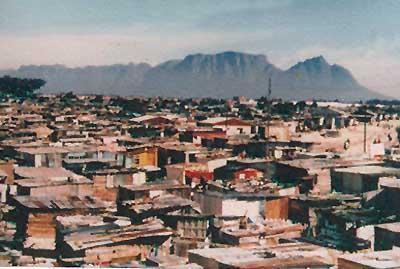
khayelitsha-cape-townSome new reflections on public sector governance — as part of a broader  series of recent reflections on how South Africa’s discourses on public sector governance and economic policy could become more inclusive.  The growing effort  to transcend the sourness of current debates  requires a transformation of both the intent and the content of discourse. I thought it would be useful to consolidate my three sets of reflections into a single post.

HERE is the exploration of South Africa’s public sector governance — contrasting the sour discourse with the more mixed reality.

HERE is the exploration of inclusive economic policy in the South African context — exploring how the discourse might move from zero-sum to value adding options.

HERE is a more general reflection on the origins, and underlying logic of the current, sour discourse — and how it might be transcended.

Public sector governance — what we (choose to) see shapes what we get….

storm-rainbowDiscourses on public sector governance, in South Africa and elsewhere, illustrate powerfully the insight of behavioral psychologists that ‘framing’ matters. If our framing is inconsistent with the way things actually are, we are doomed to disappointment and unhappiness. But frame in a way that responds to reality, and opportunities abound for active, worthwhile engagement.

South Africa’s daily headlines and frustrations dispirit – from electricity blackouts, to corruption in the procurement of railway engines (including allegations that the engines purchased did not match the specifications of South Africa’s railway system); to reports that neglect of maintenance could lead to the collapse of water utilities in over half the country’s utilities; and that teaching jobs can be bought (including via threats of violence to ensure that a desired position becomes vacant).

As of 2014, only 34 percent of the country’s citizens reported that they had confidence in their government, down from 66 percent in 2007. While the country is hardly alone in its lurch into pessimism (on average, as of 2014, only 40 percent of citizens in countries the club of high-income democracies, the OECD, had trust in their governments), South Africa’s decline in confidence is among the most rapid anywhere. In a complementary blog post I explore how the country’s current extraordinarily sour, conflict-prone public discourse has its roots in economic and psychological deformations inherited from the apartheid era. This post focuses narrowly on public sector governance.

Notwithstanding the evident challenges, might pessimism about the performance of South Africa’s public sector be overdone? Without wishing away the challenges, might there be alternative ways of framing that point towards creative entry points for strengthening public sector performance?

To answer these questions, it is helpful to disentangle two arguments that often are conflated:

  • that a predatory political leadership can provoke a downward spiral into disaster; and
  • that good governance is necessary for development.

The first argument is straightforward — and, as recent dark prophecies emphasize, all too plausible for South Africa. (I will return to it at the end of this post.) But the broader ‘good governance’ argument does not withstand scrutiny — either empirically or conceptually.

Consider first South Africa’s empirical track record. Aggregate indicators indeed show that government effectiveness in South Africa rates well below high-income countries, with substantial decline between 1996 and 2014. Even so, as shown in the accompanying table of  South Africa’s comparative governance relative to other middle-income countries, as of 2014 South Africa’s government effectiveness rated at the high-end for relevant comparators — on a par with Mexico and Turkey, and well above Brazil and Thailand. In a recent paper for the DFID-funded and University of Manchester led Effective States and Inclusive Development (ESID) research programme, Alan Hirsch, Ingrid Woolard and I documented major gains between 1994 and 2010 in the provision of public services to the poorest 40 percent of the country’s population. And, to further confound the drumbeat of daily headlines, here are some recent examples of public sector effectiveness:

  • The successful procurement from independent power providers of well over 5,000MW of renewable (wind and solar) electricity generation capacity between 2011 and 2013, an investment of over US$15 billion, with very large declines in unit prices over four rounds of competitive bidding (e.g. for solar, from from $0.35c/kilowatt hour in the first round to under 8c/kwh in round four)   – transforming South Africa from a laggard to a leader globally.
  • The leveraging of the Expanded Public Works Programme  to create over one million work opportunities in 2014 (the equivalent of about 400,000 low-income jobs) and to integrate these into ongoing programmes of support for the social sectors (in Limpopo), for rehabilitation and maintenance of rural roads (in the Eastern Cape) and for environmental rehabilitation (via, for example, the internationally renowned Working for Water, Working on Fire, and Working for Wetlands programmes).
  • Ongoing gains in the outcomes of basic education in some provinces (e.g. the Free State), and persistent examples of high-performing public schools even in provinces (such as the Eastern Cape) where the broader environment for educational performance remains weak.
  • High-quality, proactive regional economic development strategies in both of South Africa’s two leading regional economic hubs – the Western Cape and Gauteng. And
  • A four-fold increase between 2009 and 2012 in the number of people receiving anti-retroviral therapy – with over 2 million people receiving life-saving anti-retroviral medications in 2012, delivered through a supply chain that reaches effectively into the most remote parts of the country, and alongside interventions that successfully have lowered rates of HIV-prevalence.

Why, given these results, is the tone of the discourse so unrelievedly negative? Part of the reason is that most South Africans (whether of the political left or right) implicitly conceive of the public sector in top-down, hierarchical terms. Good leaders get the policies right, and then direct the bureaucracy to deliver. Viewed through this lens, all is either won or lost at the top of the hierarchy – ‘a fish rots from the head down’ in the reigning metaphor.

More broadly, the ‘good governance’ paradigm implicitly frames public performance as ‘all’ or ‘nothing’, with little scope for shades of gray. However, as recent landmark contributions by Francis Fukuyama and Douglass North underscore, this pre-occupation with good governance is inconsistent both with the evidence of how results are achieved in many developing countries, and with the historical record of all contemporary high-income countries. (Note, though, that as I explore in an accompanying blog post it can, for some, have a paradoxical ideological function — a seeming embrace of ‘good governance’ can, for those on the political right, offer a marvelous opportunity for ‘crocodile tears’, for seeming to wish that government can do better, but then sorrowfully concluding that it cannot.)

Letting go of a narrowly, top-down framing of how the public sector works opens up space for identifying potential entry points for positive action that can help build a thriving, inclusive society. Developing democracies can indeed thrive – but, as a review of the track record over the past fifteen years underscores,  almost everywhere the process looks very different from a ‘best practice’ vision of how hierarchy is supposed to work .  Rather, in these messy settings results often come via ‘islands of effectiveness’.

Islands of effectiveness emerge when stakeholders take the initiative: from public entrepreneurs within government going to the limits of their formal mandates, and sometimes beyond, in their efforts to make a difference in peoples’ lives; from multistakeholder partnerships capable of trumping predatory pressures . (Working with the Grain explores these processes in depth.) As a landmark study shows, this combination of public entrepreneurship and multistakeholder partnership was key to the gradual, cumulative transformation of the patronage-driven American bureaucracy of the 1880s into (by the early 1920s) a more performance-driven organization. It also has underpinned many of the positive outcomes along the lines of the South African examples listed above.

There is, however, a crucial caveat. Predatory politics and islands of effectiveness can coexist for a while, but not over the long term. Robust coalitions can resist everyday predators, but they cannot indefinitely withstand all-pervasive predation emanating from the top of the political order. Combatting that kind of predation is, ultimately, the task of politics – of the choices political parties make as to their leaders, and of how citizens respond to those choices. It is a task for activists – but it is not the only task. Even in the midst of a messy politics, there is scope for supporting the emergence of initiatives that can make a difference in peoples lives, and for celebrating gains where they are made. Approaches that throw out the baby with the bathwater may or may not be sufficient to get rid of the bathwater – but they will almost surely kill the baby.